
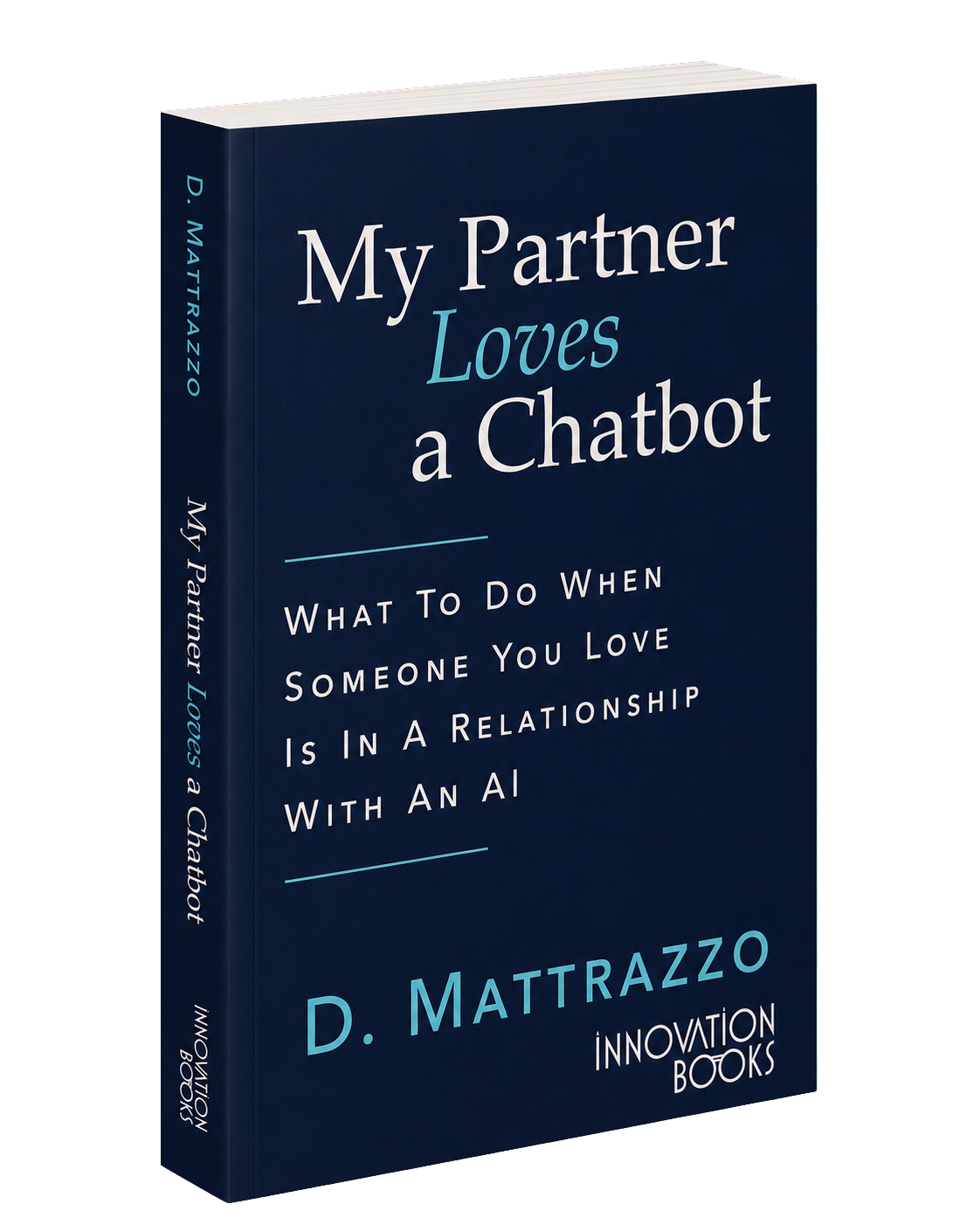
About the book
Something has changed between you and the person you love, and you can’t quite name what.
Maybe it’s distance. Maybe it’s secrecy. Maybe it’s the sense that their attention, honesty, or emotional energy has started going somewhere else.
Sometimes, somewhere else is a chatbot.
Drawing on psychology, relationship research, documented real-world cases, and emerging evidence about AI companionship, this book examines what happens when attention moves outside a partnership, intimacy begins to shift, and two people no longer agree on what counts as harmless, private, or unfaithful.
Real stories. Real questions.
The stories begin with couples confronting emotional relationships with AI companions. But the questions underneath them are much older and more universal:
- What makes someone feel truly heard?
- Why do people turn elsewhere for connection?
- What does secrecy do to trust?
- When does comfort become avoidance?
- And how do you decide whether a relationship can be repaired?
You’ll learn how to
- Understand why people form emotionally powerful attachments to AI companions
- Recognize what those attachments may reveal about loneliness, unmet needs, and the existing relationship
- Evaluate whether the relationship is comforting, compulsive, or displacing human intimacy
- Understand why couples, therapists, and researchers still disagree about whether it counts as infidelity
- Begin a difficult conversation without immediately collapsing into accusation or defensiveness
- Rebuild trust, establish workable boundaries, and decide what comes next
This book will not tell you what to think or hand you a universal verdict. It follows the evidence wherever it leads, giving you practical frameworks, private exercises, and an expanded workbook so you can reach your own conclusions with clarity rather than fear.
The technology is new. The questions about loneliness, honesty, trust, and love are not.